
What is Trade Settlement?
Trade settlement is the final step in the trade lifecycle where ownership of securities transfers from the seller to the buyer, and payment moves in the opposite direction. It involves confirmation, clearing, and actual delivery versus payment (DvP).
Key parties involved:
- Broker/Dealers — Execute and confirm trades.
- Custodians — Hold securities and facilitate transfer.
- Clearing Houses/Central Counterparties (CCPs) — e.g., DTCC in the US, Euroclear/Clearstream in Europe, NSCCL in India – act as intermediaries to reduce risk.
- Central Securities Depositories (CSDs) — Maintain electronic records of ownership.
Here's a visual overview of the typical trade settlement process:
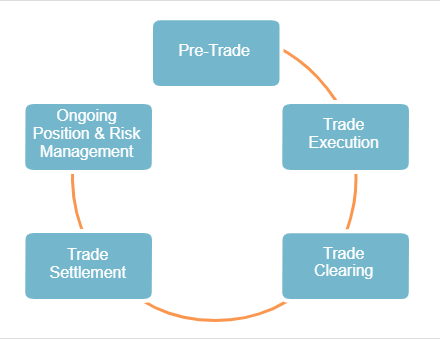
The "T+" refers to the number of business days after the trade date (T) when settlement occurs. Shorter cycles reduce counterparty risk and free up capital.
As of December 2025:
- US, Canada, Mexico → T+1 (implemented May 2024).
- India → Primarily T+1, with optional T+0 for select stocks (expanding in 2025).
- UK and EU → Still T+2, but transitioning to T+1 on October 11, 2027.
Shorter cycles mean ops teams have less time for affirmations, allocations, and funding – automation and straight-through processing (STP) are key!
Common Causes of Settlement Failures
Fails happen when securities or cash aren't delivered on time. Penalties (e.g., buy-ins or fines) can apply.
Top reasons include:
- Mismatched trade details (e.g., wrong quantity, price, or account).
- Insufficient securities or cash.
- Corporate actions (dividends, splits) not handled properly.
- Operational delays or system issues.
In ops roles, you'll investigate "breaks" using reconciliation tools and escalate to avoid penalties.
Why It Matters for Your Career
At firms like JP Morgan or NatWest, ops analysts monitor high-volume settlements, handle exceptions, and ensure compliance. Freshers often start here – strong attention to detail and knowledge of systems like SWIFT, Bloomberg, or Aladdin shine.
Interview Tip: Be ready for "Walk me through the settlement process for an equity trade" or "What would you do if a trade fails to settle?" Explain the lifecycle, mention T+ cycles, and stress risk mitigation.
That's trade settlements in a nutshell! Next up, we'll dive into NAV Calculation. Drop a comment if you have questions or want more interview scenarios. Keep learning – you've got this! 🚀




0 Comments